CAPITAL OF CRUSTARA
Pastrypolis
Crustara’s civic, cultural, governmental, and economic heart—a river city built at the southern foot of the Glazebite Mountains, where old streets, working districts, public institutions, and buried layers of history all meet.
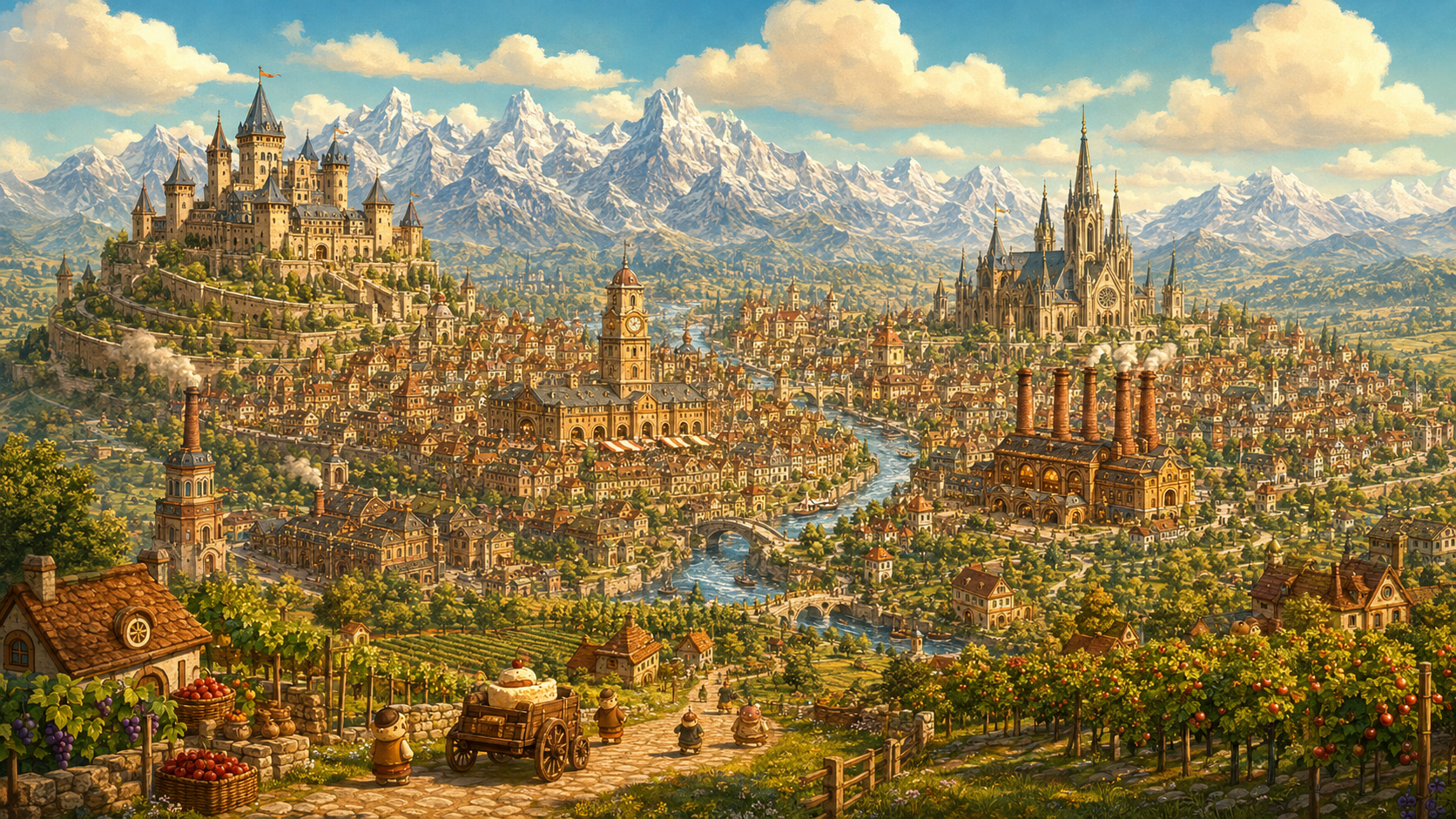
Pastrypolis is the largest and most important city in Crustara.
Geography & Setting
Pastrypolis sits in a broad, fertile river valley at the southern foot of the Glazebite Mountains. The mountains remain visible from much of the city, shaping its climate, water supply, trade routes, and sense of direction without enclosing it completely.
The Glazewater River curves through the city before continuing toward the lowlands and, farther west, the Chantilly Sea. Bridges, quays, mills, parks, working riverfronts, and civic districts all grew around that waterway over time.
Beyond the urban edge, orchards, vineyards, farms, smaller settlements, and open southern countryside spread outward from the capital.
A City Above—and Below
Pastrypolis has been rebuilt, expanded, redirected, and layered over many centuries. Beneath its modern streets lie old water channels, cisterns, aqueducts, mill races, drainage tunnels, utility corridors, basements, vaults, and foundations from earlier stages of the city.
Many passages are sealed, collapsed, redirected, forgotten, or only partially documented. In Pastrypolis, going underground often means moving backward through the city’s history.
The deepest parts of that history are best discovered through The Cheesecake Chronicles.
Districts & Neighborhoods
Old Town & Civic Core
The historic heart grew around an ancient river crossing on slightly elevated ground. Government, civic institutions, old streets, plazas, and some of the city’s most recognizable architecture concentrate here.
The Crust
A worn, heavily used part of the city shaped by workshops, older housing, practical commerce, and generations of everyday life. The Crust is not a designated poverty zone or a lawless wasteland—it is worn because people use it, not because nobody cares about it.
CES District / Pie Works
At the edge of the older working city stands a decommissioned pie factory that became the operational home of Cheesecake Emergency Services. Workshops, yards, repurposed industrial buildings, and a recognizable tower make up the surface complex.
What appears aboveground is only part of CES. The headquarters also extends into converted and purpose-built underground spaces beneath the former factory.
Outer City & River Districts
Later neighborhoods spread across terraces, riverbanks, and the open southern basin. Their identities vary with trade, access to bridges and roads, local craft, and proximity to the river or countryside.
Life in Pastrypolis
Pastrypolis is meant to feel lived in rather than ornamental. Markets, workshops, civic buildings, river traffic, public squares, working neighborhoods, religious sites, emergency services, shops, homes, and older industrial spaces all share the city.
Its architecture grows from Bavarian and Gothic-inspired foundations, with dessert influence appearing in materials, ornament, signage, rooflines, piping-like trim, glazed details, and handcrafted construction rather than turning the city into literal candy scenery.
The result is a capital that feels old, practical, beautiful, busy, and unmistakably part of Viandria.
Cheesecake Emergency Services
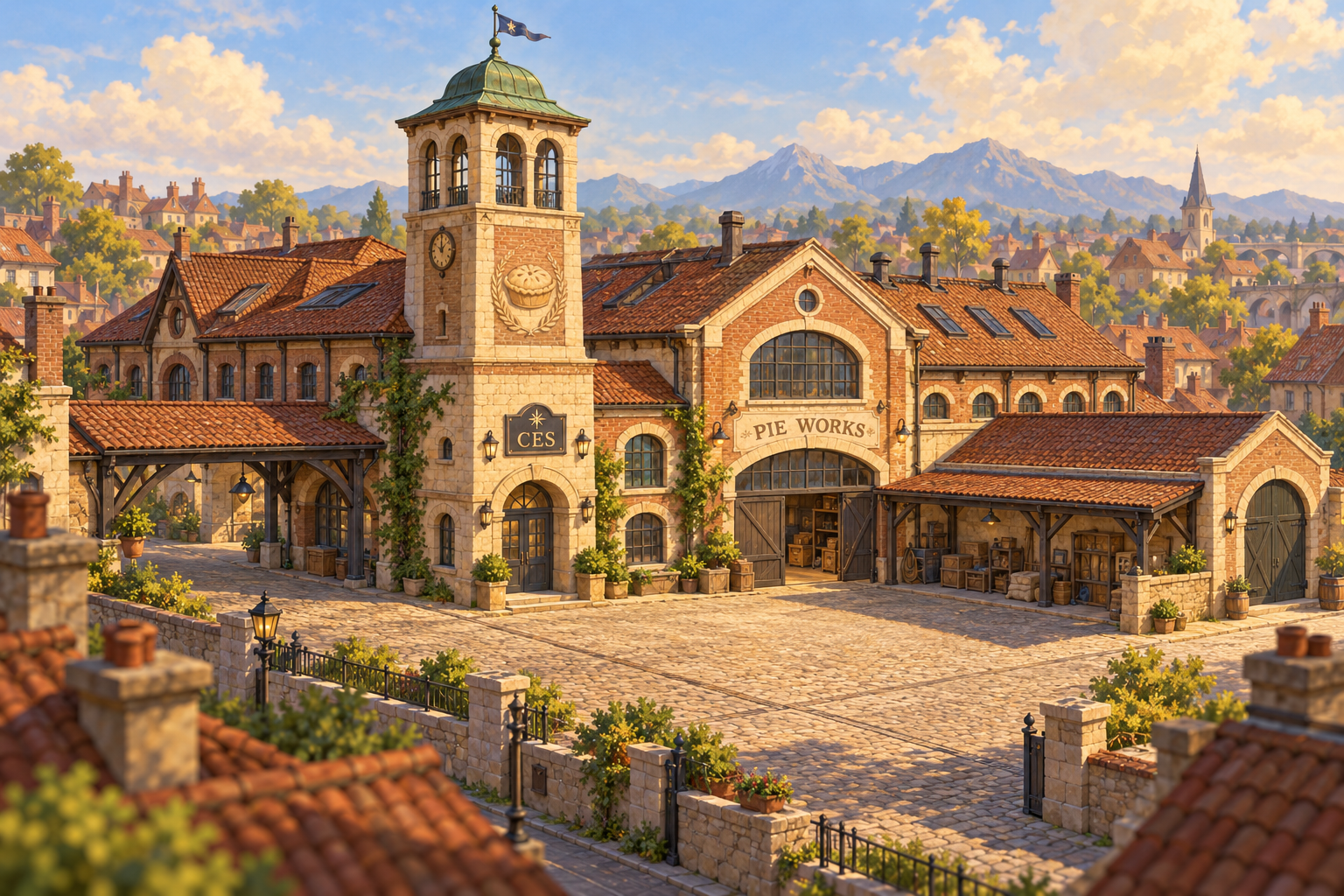
CES operates from the former Pie Works because the site offered exactly what an emergency organization needed: large interior spaces, workshops, loading areas, durable construction, vehicle access, storage, utility connections, and room to expand.
Its position near the transition between working districts and the broader outer city also gives response teams access to major streets without forcing every deployment through the most congested parts of the historic center.
The headquarters is practical, adapted, and much larger beneath the surface than it first appears—very much like CES itself.
Why Pastrypolis Matters
Pastrypolis is where Crustara’s regions converge and where much of The Cheesecake Chronicles begins. It is a place of government and trade, but also of ordinary streets, overlooked corners, old infrastructure, and desserts trying to find their place in the city.
The capital’s visible life is only one layer of its story. The rest waits beneath the streets—and in the chapters themselves.

