CHAPTER 12
Below the Quiet Streets
“The deeper you go, the more important it becomes to know what is holding you up.”
Glazey Dave arrived prepared.
Whip Siren knew this because he said so.
“I am prepared.”
She looked at him.
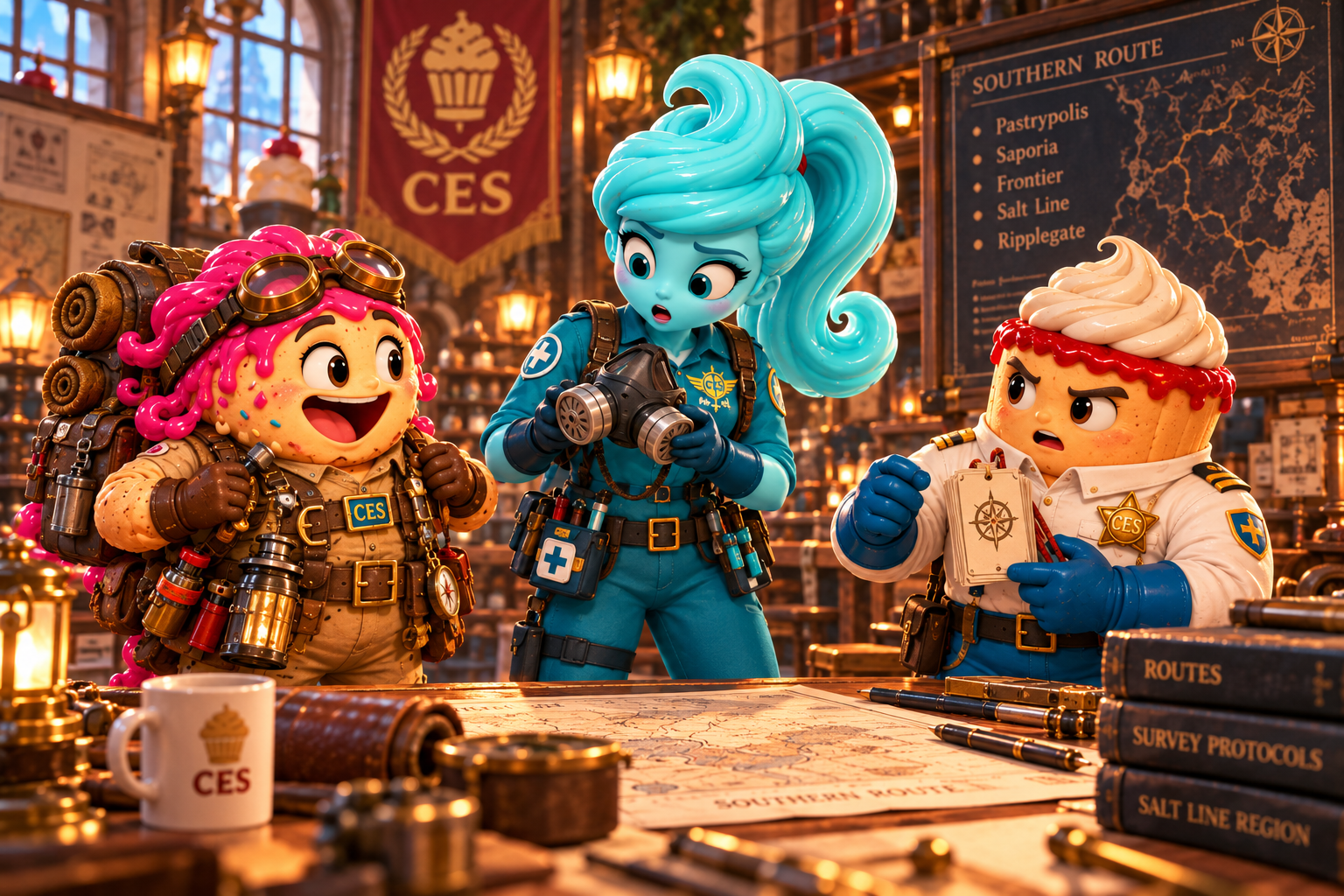
Dave wore his field harness.
Goggles secured.
Three jelly coils properly seated.
Compact tool pouch closed.
Lantern attached.
Protective gloves on.
For once, nothing appeared to be hanging from him simply because he had found it interesting.
Whip looked down at the equipment laid across the table.
“Where is your respirator?”
Dave stopped.
His expression changed.
“I was prepared emotionally.”
“Respirator.”
He went back for it.
Whip checked the route map again.
The old thermal-access passage beneath the Pie Works had been copied onto fresh paper. Modern service corridors appeared in clean black lines.
The older passages had been added in brown.
Some matched.
Some stopped abruptly.
One continued through what the current plans described as solid foundation.
Dave returned.
Respirator attached.
“Now I am prepared in several categories.”
Whip handed him a second lantern.
“Take this.”
“I already have one.”
“Take this.”
Dave took it.
“Your confidence in the first lantern is inspiring.”
“My confidence in you is appropriately measured.”
Captain Crumble entered.
Both turned.
Crumble carried no field gear.
Dave looked disappointed.
“You’re not coming.”
“No.”
“Afraid of tunnels?”
“No.”
“Busy?”
“Yes.”
Dave nodded.
“Less interesting.”
Crumble placed a small packet on the table.
“Survey tags. Number every junction.”
Whip took them.
“Air check every fifty paces?”
“Every new chamber and any elevation change.”
“Heat readings?”
“Continuous.”
Dave raised one hand.
“Touching?”
“No.”
“Hypothetically—”
“No.”
“What if something is already touching me?”
Whip looked at him.
Crumble answered first.
“Then I expect a very detailed report.”
Dave lowered his hand.
“Fair.”
Crumble looked toward the old map.
“Your objective is the first restricted thermal station.”
Dave nodded.
“Inspect the old sensors, determine whether the passage is intact, and confirm whether yesterday’s interference has a physical source.”
“Correct.”
“If the route continues?”
“You do not continue beyond the station.”
Dave hesitated.
Crumble noticed.
“That was not complicated.”
“No.”
“You will return.”
“Yes.”
Whip folded the map.
“We’ll return.”
Crumble looked at her.
That was why Whip was going.
“Good.”
Far south of Pastrypolis, Driftwood Strudel did not believe in unnecessary conversation.
Russet Pike did not either.
This made them excellent traveling companions.
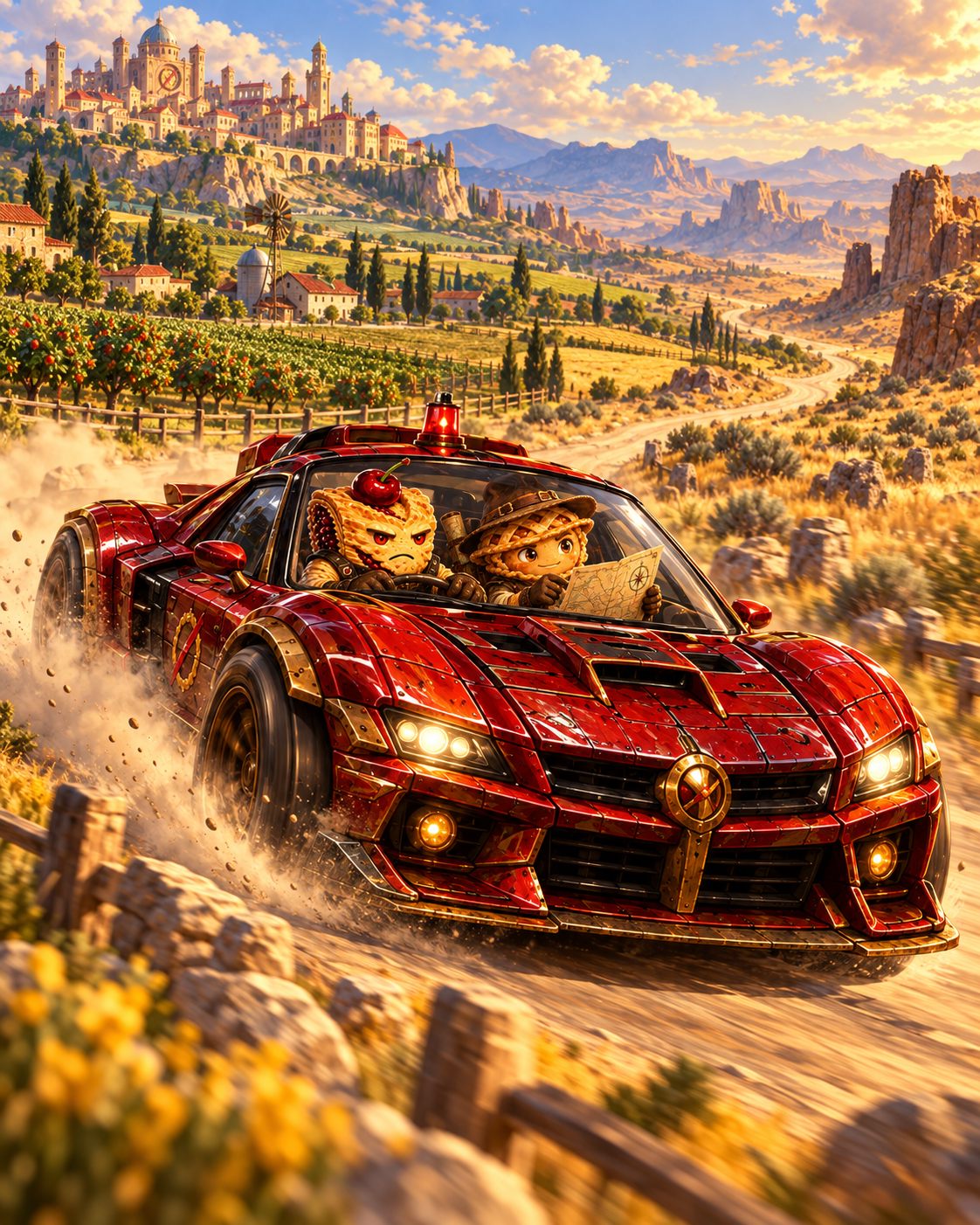
The Red Line Ghost moved along the southern road in a low mechanical hum.
Its caramel-pressure drivetrain held steady.
The vehicle was narrower than the Swirl Unit, lower to the ground, and built for roads that had stopped behaving like roads.
Driftwood sat forward.
Both hands on the controls.
Eyes moving constantly.
Road.
Horizon.
Mirrors.
Road again.
Russet sat beside him with a folded map across his lap.
They had left before sunrise.
They had spoken perhaps twelve sentences.
Nine had been useful.
The other three concerned breakfast.
Russet looked toward the country ahead.
The fertile land south of Pastrypolis had begun to flatten.
Farmsteads stood farther apart.
Irrigation channels cut through the fields.
Beyond them, the land gradually dried.
Not yet Sablonne.
Not yet the Salt Line.
But approaching both.
Russet tapped the map.
“Old road turns east ahead.”
Driftwood did not look over.
“Current road?”
“South.”
“Which one?”
“Old.”
Driftwood glanced at him.
“Why?”
“Current road was rebuilt after the western washout.”
“That sounds like a reason to use it.”
“It also moves us twelve miles away from Ripplegate.”
Driftwood changed lanes.
“Old road.”
Russet folded the map.
“That was easy.”
“You expected an argument?”
“No.”
“You sounded disappointed.”
“I spend time with Dave.”
Driftwood understood.
They turned east.
Strawbrawler stood on one foot.
He did not enjoy this.
Blue Bulk sat on the fountain edge.
He appeared to enjoy everything equally.
Which was somehow worse.
“How long?”
“Until you stop asking.”
Strawbrawler lowered his raised foot.
“That is not a real measurement.”
“No.”
“My leg hurts.”
“Good.”
Strawbrawler stared.
Blue Bulk clarified.
“Useful.”
“You should stop saying ‘good’ after bad things.”
Blue Bulk considered.
“No.”
Strawbrawler sighed and lifted his foot again.
The exercise sounded stupid.
That had been his first opinion.
It remained his opinion.
Blue Bulk had told him to stand on one foot and notice how his body corrected itself.
Strawbrawler had informed him that everyone knew how to stand on one foot.
Blue Bulk had told him to do it.
Strawbrawler had nearly fallen over.
They had not discussed the contradiction.
“Stop fighting the wobble,” Blue Bulk said.
“I am not fighting.”
“You are.”
“I’m balancing.”
“You are correcting every movement after it happens.”
“What else am I supposed to do?”
“Notice before.”
Strawbrawler glared.
“Before I wobble?”
“Yes.”
“How?”
Blue Bulk looked at him.
“That is why we are here.”
Strawbrawler muttered something about mountains.
Blue Bulk heard him.
“What?”
“Nothing.”
“Again.”
Strawbrawler steadied himself.
His lifted foot trembled.
His standing ankle shifted.
He corrected.
Too late.
Again.
Another small correction.
Again.
Then—
there.
A tiny change through his crust before his body leaned.
He adjusted first.
The wobble never came.
Strawbrawler’s eyes widened.
Blue Bulk nodded.
“There.”
Strawbrawler lowered his foot.
“I felt it.”
“Yes.”
“That was weird.”
“Yes.”
“I hate that you make weird things sound normal.”
“They become normal.”
Strawbrawler looked at him.
“That’s either comforting or terrifying.”
“Most useful things are both.”
Strawbrawler sat down.
Blue Bulk stood.
“That was not permission to stop.”
“It was permission from my leg.”
Blue Bulk waited.
Strawbrawler groaned and stood again.

Beneath the Pie Works, the air changed first.
Whip stopped.
Dave nearly walked into her.
“Why—”
She held up one hand.
Dave went quiet.
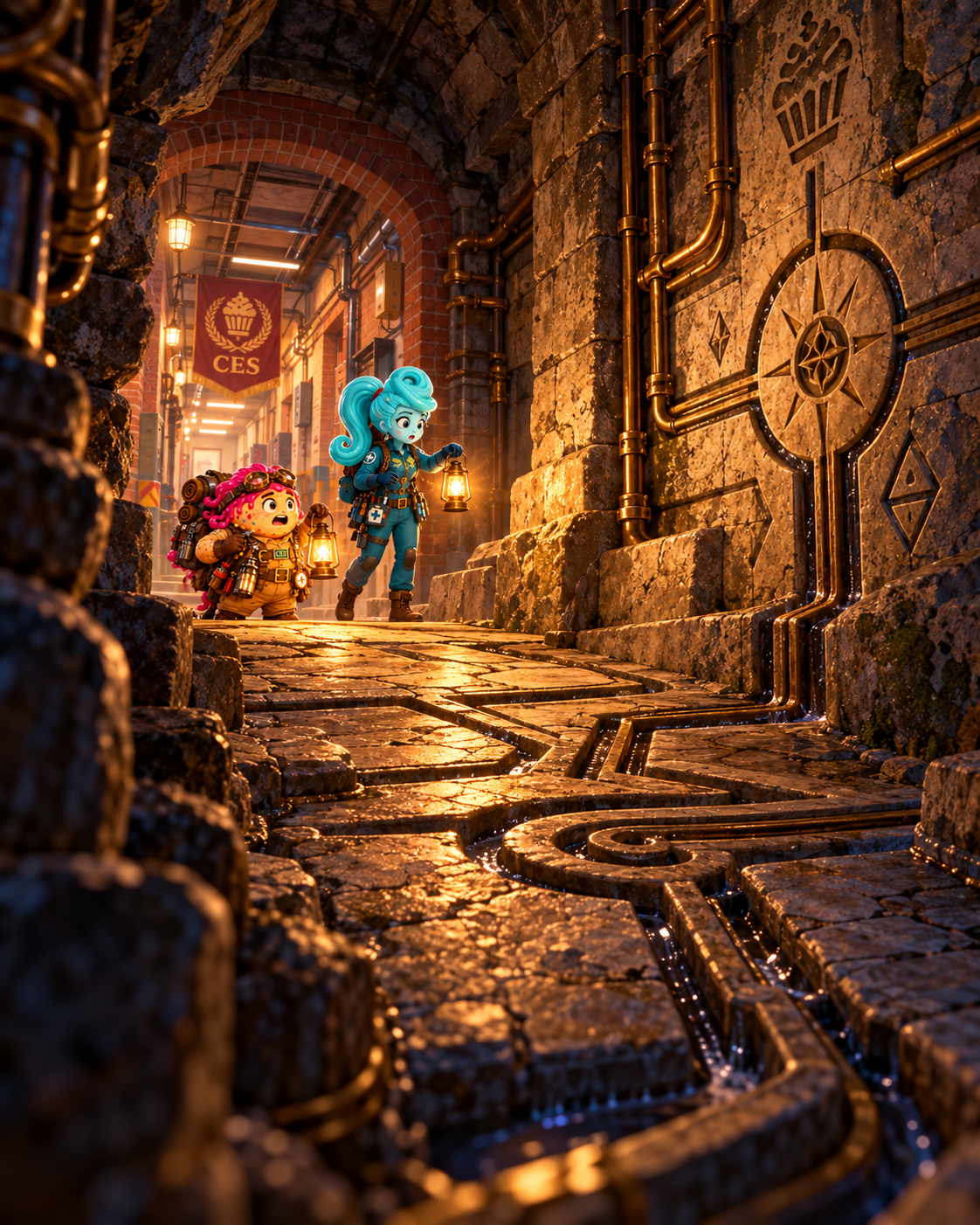
The modern service corridor ended twenty paces behind them.
Everything ahead belonged to an older Pastrypolis.
Brick gave way to stone.
The ceiling lowered.
Old brass conduits ran along one wall.
Most had been disconnected decades ago.
Whip lifted the air gauge.
Normal.
She checked temperature.
Cool.
Then the stone.
Slightly warmer.
“Two degrees.”
Dave looked at the wall.
“Compared with the last junction?”
“Yes.”
“Ventilation?”
“Minimal.”
“Heat source?”
“None mapped.”
Dave crouched.
His lantern illuminated a narrow channel cut along the base of the wall.
Not pipe.
Not drainage.
Something else.
“What is that?”
Whip joined him.
The channel disappeared beneath the floor.
Dave took out a small measuring rod.
He did not touch it.
Whip noticed.
“Good.”
“I can learn.”
“Slowly.”
Dave looked along the channel.
“This workmanship is older than the Pie Works.”
“How much older?”
“I’m an engineer, not Mara.”
“That was not an answer.”
“Old enough that whoever made it liked corners.”
Whip looked.
Every few feet, the channel changed direction sharply.
Not randomly.
A repeating pattern.
“Heat distribution?”
“Maybe.”
“Fluid?”
“No residue.”
“Electrical?”
Dave looked offended.
“With this?”
“You tell me.”
He leaned closer.
“Not electrical.”
Whip marked the location.
They continued.
Dr. Mara Toffel had slept.
Technically.
For forty-three minutes.
Captain Crumble learned this because Mara told her proudly.
“That is not enough.”
“It is more than none.”
“That is not the standard.”
Mara turned another page.
Crumble stood beside the research table.
The historical fragment remained sealed beneath glass.
Do not mistake recurrence for return.
Below it:
…Overbake is not…
Crumble disliked incomplete sentences.
She disliked them more when they were several centuries old.
“What have you found?”
“Mostly disagreement.”
“That useful?”
“Very.”
Crumble waited.
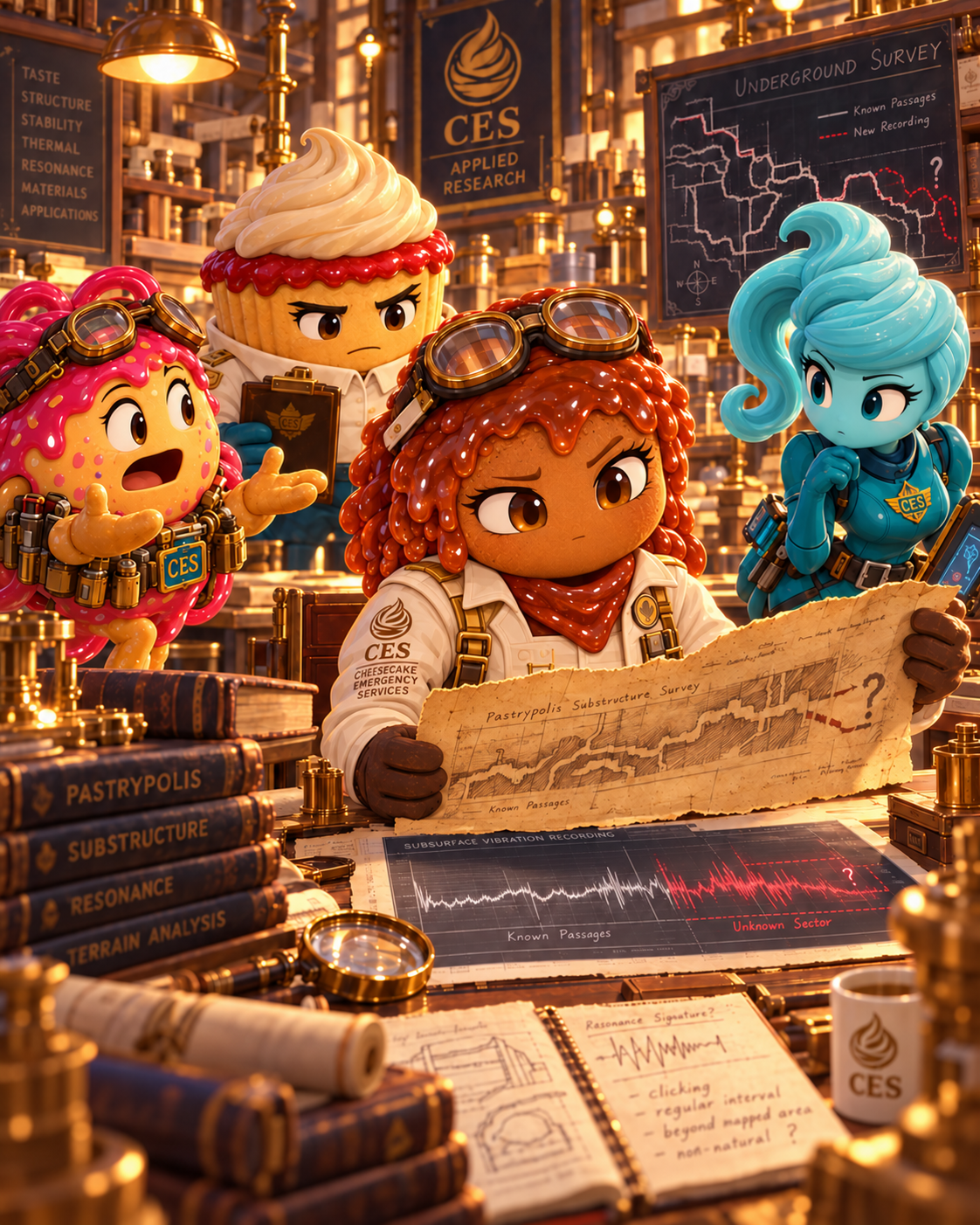
Mara pushed three books together.
“In the oldest accounts, ‘Overbake’ appears to mean different things depending on who is writing.”
“Such as?”
“Disaster.”
She tapped one.
“Process.”
Another.
“Warning.”
Another.
“And in two religious texts, possibly judgment.”
Crumble’s expression remained flat.
Mara noticed.
“I said possibly.”
“Good.”
“One engineering ledger uses it as if everyone reading already knows what it means.”
“That’s helpful.”
“No.”
Mara turned the ledger toward her.
A repair entry.
Short.
Routine.
Third lower seal replaced after Overbake pressure recurrence.
Crumble read it twice.
“Seal?”
“Yes.”
“What kind?”
“Not stated.”
“Location?”
“Not stated.”
“Date?”
Mara pointed.
Crumble frowned.
“This predates the current street grid.”
“Yes.”
“Can we locate it?”
“Eventually.”
“How eventually?”
“With enough maps, annoyingly.”
Crumble nodded.
“Do it.”
Mara looked toward the sealed fragment.
“There is something else.”
“What?”
“The language changes over time.”
Crumble waited.
“In early records, Overbake is described as something they respond to.”
“And later?”
“Something they remember.”
Crumble looked back at the pages.
“That could just mean the event ended.”
“Yes.”
“But you don’t think so.”
Mara pushed her goggles higher.
Again.
“I think people stopped understanding whatever the original writers understood.”
Crumble was quiet.
That possibility bothered her more.
Whip and Dave reached the first old instrument vault forty-seven minutes after entering the lower passage.
The door remained.
Mostly.
It had been built from dark timber reinforced with iron straps.
One hinge had failed.
The door leaned inward.
A faded symbol remained on the center panel.
Dave raised his lantern.
“A thermometer?”
Whip studied it.
“Looks like an oven dial.”
“Comforting.”
“No.”
They tested the chamber.
Air.
Safe.
Heat.
Three degrees above the corridor.
Structural load.
Acceptable.
Whip looked at Dave.
“Enter.”
Dave smiled.
“I like when you say that.”
“I know.”
They stepped inside.
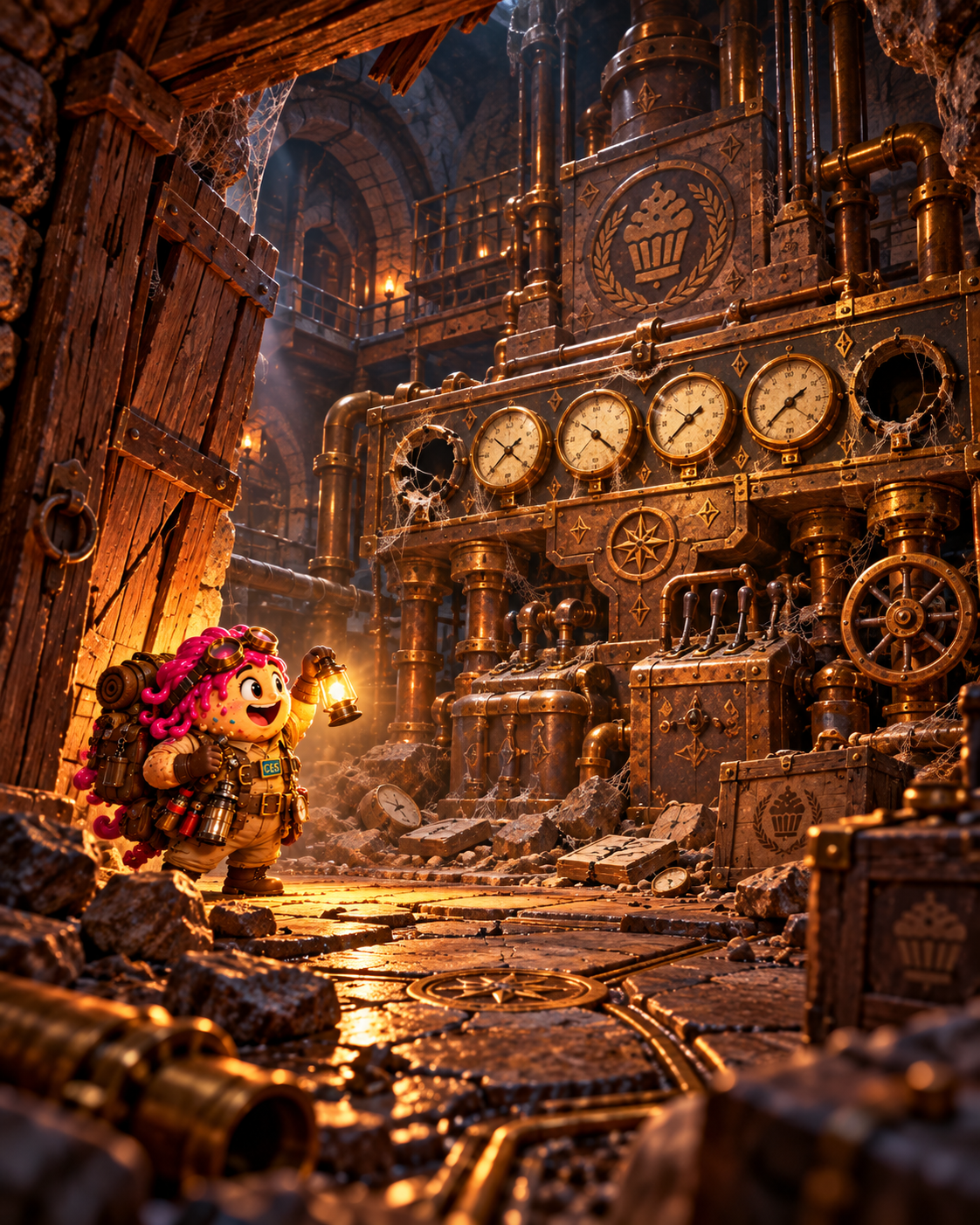
The room was small.
Stone shelves lined one side.
An old brass instrument assembly occupied the other.
Dave stopped.
Whip noticed immediately.
“What?”
He approached slowly.
The apparatus had once contained six gauges.
Four remained.
Two were missing.
A circular chart drum sat beneath them.
Glass tubes ran into the wall.
Everything was dusty.
Everything should have been dead.
Dave raised one hand.
Stopped before touching it.
“May I?”
Whip checked the room again.
“Gloves.”
He wiggled his fingers.
Already wearing them.
“May I?”
“Yes.”
Dave carefully turned one of the gauge housings.
It moved.
Loose.
He opened the rear plate.
No wires.
No active pressure line.
Nothing.
He looked at Whip.
“Disconnected.”
“All of it?”
Dave checked.
One.
Two.
Three.
Four.
“Yes.”
Whip stared at the gauges.
“Then yesterday’s note about instruments moving after disconnection…”
Dave looked at her.
Neither finished.
Whip took out the portable monitor.
“Record.”
Dave nodded.
He inspected the chart drum.
A paper roll remained inside.
Old.
Brittle.
Blank.
Mostly.
Dave turned the mechanism by hand.
The paper advanced.
A faint line appeared.
Whip leaned closer.
“Old recording?”
“Probably.”
Dave turned again.
More line.
Uneven.
Then a series of sharp peaks.
Then gaps.
Whip’s expression changed.
Dave saw it.
“That looks familiar.”
“Yes.”
The pattern was crude.
Old equipment.
Old paper.
But the shape—
rise.
gap.
jump.
flat.
fall.
Very close to yesterday’s interference.
Dave stopped turning.
Whip stared.
“How old?”
“No idea.”
“Decades?”
“At least.”
“Could be older?”
“Yes.”
Whip looked around the room.
No one joked.
Then one of the disconnected needles moved.
Just once.
A tiny twitch.
Dave stepped backward.
Whip did too.
The needle stopped.
“Did you touch it?”
“No.”
“Anything connected?”
“No.”
The second needle moved.
Whip grabbed the portable monitor.
Its reading dropped to zero.
Dave stared at it.
“Whip.”
“I see it.”
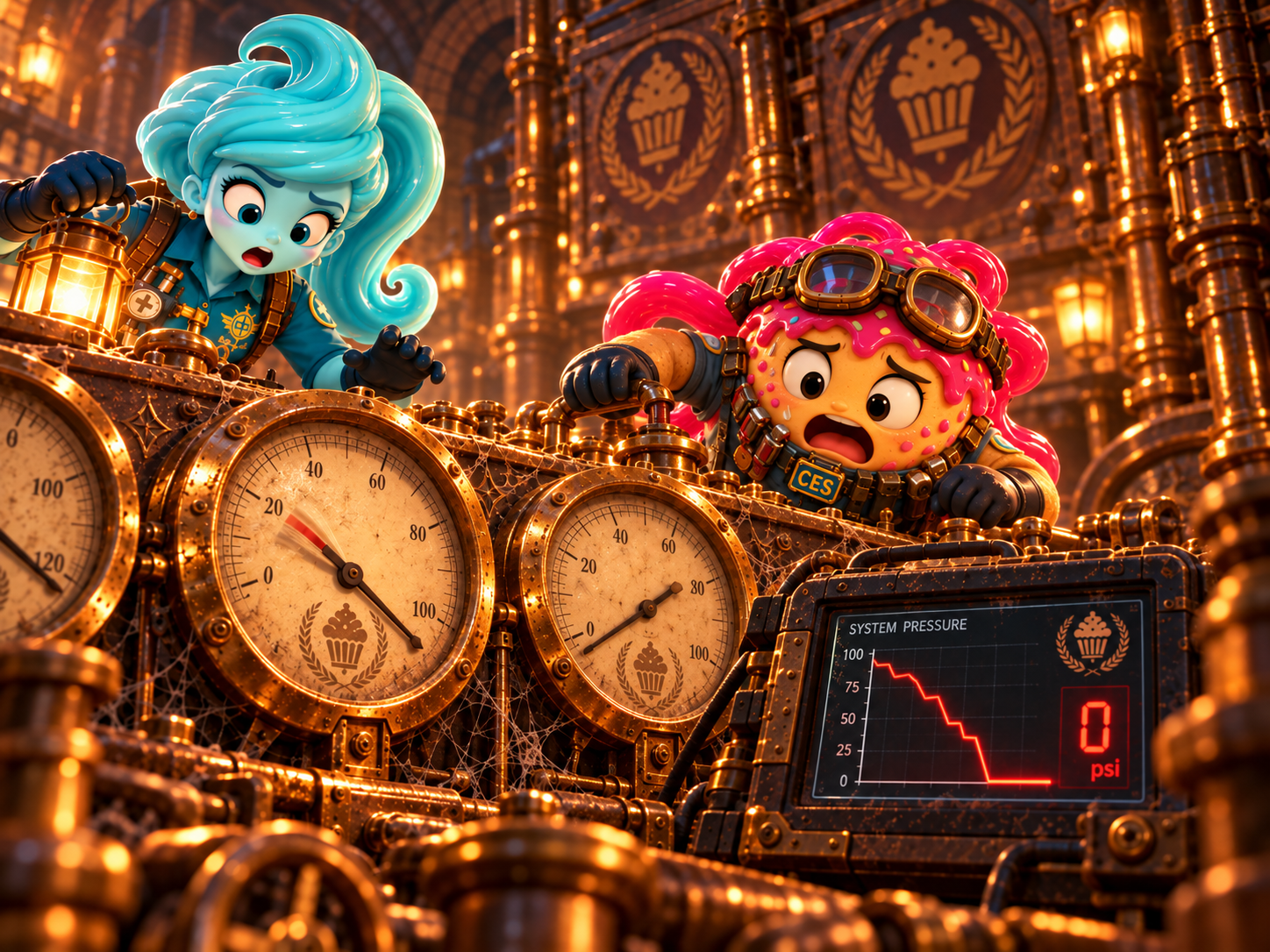
Then the temperature rose.
One degree.
Two.
Three.
Fast.
“Out.”
Dave obeyed.
No argument.
They backed into the corridor.
Whip kept watching the monitor.
Four degrees.
Five.
Then—
normal.
The portable reading returned.
The old needles settled.
Dave looked toward the instrument vault.
“I would like to revise my earlier excitement.”
Whip marked the junction.
“Good.”
Dave looked deeper into the passage.
The old corridor continued beyond the vault.
Dark.
Crumble had told them not to continue.
Dave stared.
Whip stared too.
From somewhere farther ahead came a sound.
Not loud.
A metallic click.
Then another.
Then many.
Small.
Irregular.
Like distant instruments waking one after another.
Dave swallowed.
“We’re going back.”
Whip nodded.
“Yes.”
Neither needed convincing.
The southern road narrowed before noon.
Then narrowed again.
Then stopped pretending.
Driftwood slowed the Red Line Ghost.
Russet leaned forward.
The packed road ahead disappeared beneath pale mineral crust.
Beyond it, low ridges shimmered beneath dry air.
White.
Amber.
Gray.
The country looked as though something enormous had spilled across it long ago and hardened.
Russet unfolded the route map.
“This is earlier than expected.”
Driftwood looked ahead.
“Salt?”
“Not the Line itself.”
“Spread?”
“Probably.”
Driftwood stopped the vehicle.
Russet opened the door.
“I’ll walk it.”
“How far?”
“Until the road admits what it is.”
Driftwood nodded.
Russet stepped out.
Broad-brimmed hat.
Survey stick.
Map satchel.
He tested the surface.
Firm.
Three steps.
Firm.
Ten.
The crust changed color.
He tapped.
Hollow.
Russet stopped.
Driftwood watched.
Russet marked the spot with chalk.
Then moved left.
Tested again.
Solid.
He continued.
The route curved away from what looked like the road.
Driftwood waited.
Russet eventually raised one hand.
Left.
Driftwood started the Ghost.
The vehicle left the visible road.
A less experienced driver might have questioned that.
Driftwood did not.
The Red Line Ghost followed Russet’s line exactly.
Its wheels passed within inches of the first hollow patch.
The crust there collapsed after they had passed.
Not deeply.
Enough.
Russet climbed back inside.
Driftwood looked toward the hole in the rear mirror.
“You knew?”
“I suspected.”
“Difference?”
“If I knew, I wouldn’t have walked on it.”
Driftwood nodded.
They continued.
Ahead, a faint haze blurred the horizon.
Russet folded the map.
“That’s the beginning.”
“The Salt Line?”
“The country before it.”
Driftwood looked toward the haze.
“Useful distinction?”
“Yes.”
“Good.”
They drove on.

Strawbrawler hit the practice block.
Nothing happened.
He looked at Blue Bulk.
Blue Bulk looked back.
Strawbrawler hit it again.
Nothing.
Again.
Nothing.
“This worked yesterday.”
“Yes.”
“Why not now?”
“Because you are trying to make it happen.”
Strawbrawler lowered his hands.
“You told me that already.”
“Yes.”
“It remains annoying.”
“Yes.”
Strawbrawler paced.
“I felt it when Slice hit me.”
Blue Bulk nodded.
“I felt it with the wagon.”
“Yes.”
“I felt it when you pushed me.”
“Yes.”
“So push me.”
“No.”
Strawbrawler stopped.
“Why?”
“Because then you learn to need me.”
Strawbrawler opened his mouth.
Closed it.
Blue Bulk continued.
“You do not need me to create pressure.”
“But I need pressure.”
“You have weight.”
“So does everyone.”
“Yes.”
“Then why doesn’t everyone do this?”
Blue Bulk considered.
“I don’t know.”
Strawbrawler groaned.
“You say that so calmly.”
“It remains true even when said loudly.”
Strawbrawler looked at the block.
“What am I supposed to do?”
Blue Bulk pointed toward it.
“Move it.”
“Without hitting it?”
“Yes.”
“With what?”
“Your hands.”
Strawbrawler stared.
“That sounds suspiciously ordinary.”
“It is.”
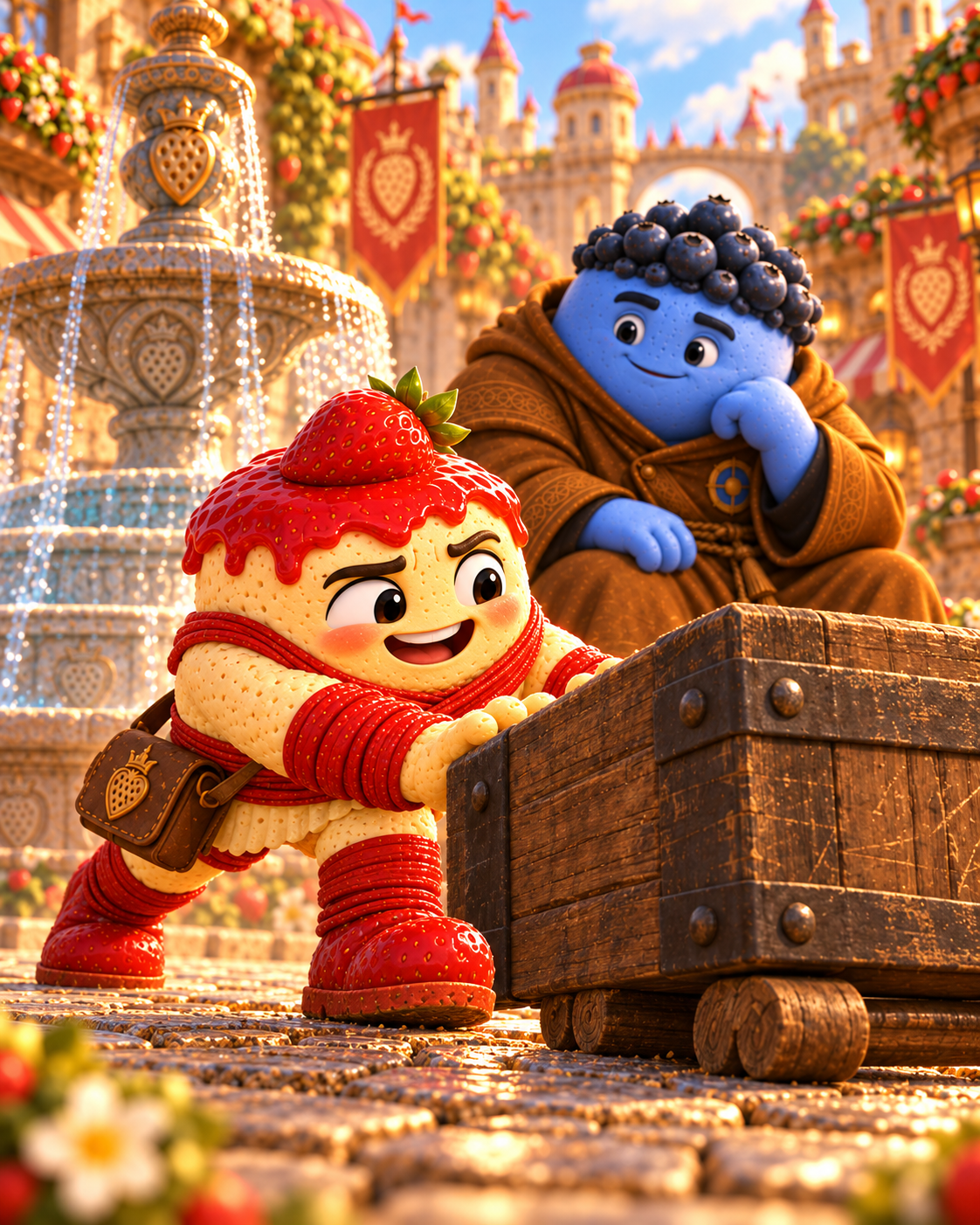
He crouched.
Placed both hands against the block.
Pushed.
It slid.
Blue Bulk nodded.
“Again.”
They reset it.
Push.
Again.
Reset.
Push.
Strawbrawler became irritated.
“Where is the part where I learn the ability?”
“This.”
“No.”
“Yes.”
“I’m moving wood.”
“You are moving weight.”
“That is the same thing.”
“It is not.”
Strawbrawler stopped.
Blue Bulk walked over.
“Yesterday you waited for the heat.”
“Yes.”
“You noticed it because it was unusual.”
“Yes.”
“Today notice everything before it.”
Strawbrawler looked at the block.
“The weight.”
“Yes.”
“The ground.”
“Yes.”
“My feet.”
“Yes.”
“My arms.”
“Yes.”
Blue Bulk tapped his chest lightly.
“Yourself.”
Strawbrawler stared.
“That sounded philosophical.”
“It was physical.”
“Oh.”
“Again.”
Strawbrawler pushed.
This time he paid attention.
Feet.
Stone.
Hands.
Wood.
Resistance.
His body adjusted.
Not dramatically.
But correctly.
Again.
Reset.
Push.
The pressure came almost unnoticed.
A warmth beneath the strawberry glaze.
Strawbrawler froze.
Blue Bulk saw it.
“Keep moving.”
“But—”
“Keep moving.”
Strawbrawler pushed.
The warmth stayed.
The block moved.
No crack.
No burst.
No sudden strike.
Just warmth and weight existing together.
He pushed the block another foot.
Stopped.
Blue Bulk nodded.
Strawbrawler stared at his hands.
“I did it.”
“You moved a block.”
“You know what I mean.”
“Yes.”
Strawbrawler grinned.
Blue Bulk allowed him three seconds.
Then:
“Again.”
The grin vanished.
“You ruin everything.”
“No.”
“You do.”
“Again.”
Strawbrawler reset the block.
Still smiling.
Whip and Dave returned to the Pie Works dirty, warm, and ahead of schedule.
Captain Crumble knew immediately that something had happened.
Dave was quiet.
That was enough.
They met in the operations room.
Mara arrived moments later.
Whip set the portable monitor on the table.
“First thermal vault exists.”
Mara leaned closer.
“Condition?”
“Stable enough to enter.”
“Temperature?”
“Initially elevated three degrees above corridor.”
“Initially?”
Whip looked at Dave.
He explained.
“Old gauges. Completely disconnected. No active pressure lines. No power. No mechanical linkage.”
Mara waited.
“One moved.”
Her expression changed.
“Moved how?”
“Twitch.”
“Could you reproduce it?”
“No.”
“Contact?”
“No.”
“Vibration?”
“Not enough.”
“Air movement?”
“No.”
Mara reached for her notebook.
Dave continued.
“Then another moved.”
Mara wrote faster.
“Portable equipment?”
“Dropped to zero simultaneously,” Whip said.
“Temperature?”
“Rose five degrees within seconds.”
Mara stopped writing.
“Five?”
“Yes.”
“Localized?”
“Inside vault and immediately outside.”
“Then?”
“Returned to baseline.”
Crumble folded her arms.
“How long?”
“Under a minute.”
“Anything after?”
Whip and Dave exchanged a look.
Crumble saw it.
“What?”
Dave answered.
“Sounds.”
“Describe.”
“Mechanical.”
“Source?”
“Deeper.”
Mara looked at the old map.
“What kind of mechanical?”
Dave hesitated.
“Like gauges.”
Whip nodded.
“Multiple.”
Crumble looked toward the passage line.
“How many old stations beyond the first?”
Mara checked.
“On this plan?”
“Yes.”
“Five.”
Dave shook his head.
“No.”
Mara looked at him.
“What?”
“There are more.”
“How do you know?”
“The sound.”
Silence.
Dave continued.
“Five stations wouldn’t make that much.”
Whip added:
“And the spacing was wrong.”
Mara looked between them.
“Meaning?”
Whip pointed deeper on the plan.
“Whatever was clicking continued beyond the mapped corridor.”
Crumble studied the paper.
Mara moved closer.
“That doesn’t prove another chamber.”
“No,” Whip said.
“It proves the map is incomplete.”
Crumble looked at her.
“That is enough.”
Mara began writing again.
Dave placed the old paper trace on the table.
“And this.”
Mara froze.
She took it carefully.
Compared it to the modern charts.
Once.
Twice.
Then a third time.
“Where?”
“Inside the disconnected chart drum.”
“How old?”
“No idea.”
Mara looked at the line.
The old pattern.
The gaps.
The impossible jumps.
Yesterday’s behavior.
Not identical.
Close enough.
Crumble saw the conclusion forming.
“Say it.”
Mara shook her head.
“Not yet.”
“Mara.”
“I can say the interference pattern may have precedent.”
“May?”
“Yes.”
Dave looked at the old trace.
“It looks the same.”
“It looks similar.”
“How similar does history have to get?”
“Similar enough that I want dating, material analysis, and another sample before you say ‘same.’”
Dave looked at Whip.
“This is why nobody invites scientists to dramatic revelations.”
Mara ignored him.
Crumble did not.
“This existed before CES.”
Mara looked at the trace.
“Yes.”
“Long before yesterday.”
“Yes.”
“Possibly before any of us.”
“Yes.”
Crumble’s attention shifted toward the southern route map.
“And now Russet and Driftwood are on their way to determine whether the Salt Line has noticed it too.”
Mara closed her notebook.
“I hope it hasn’t.”
Nobody asked why.
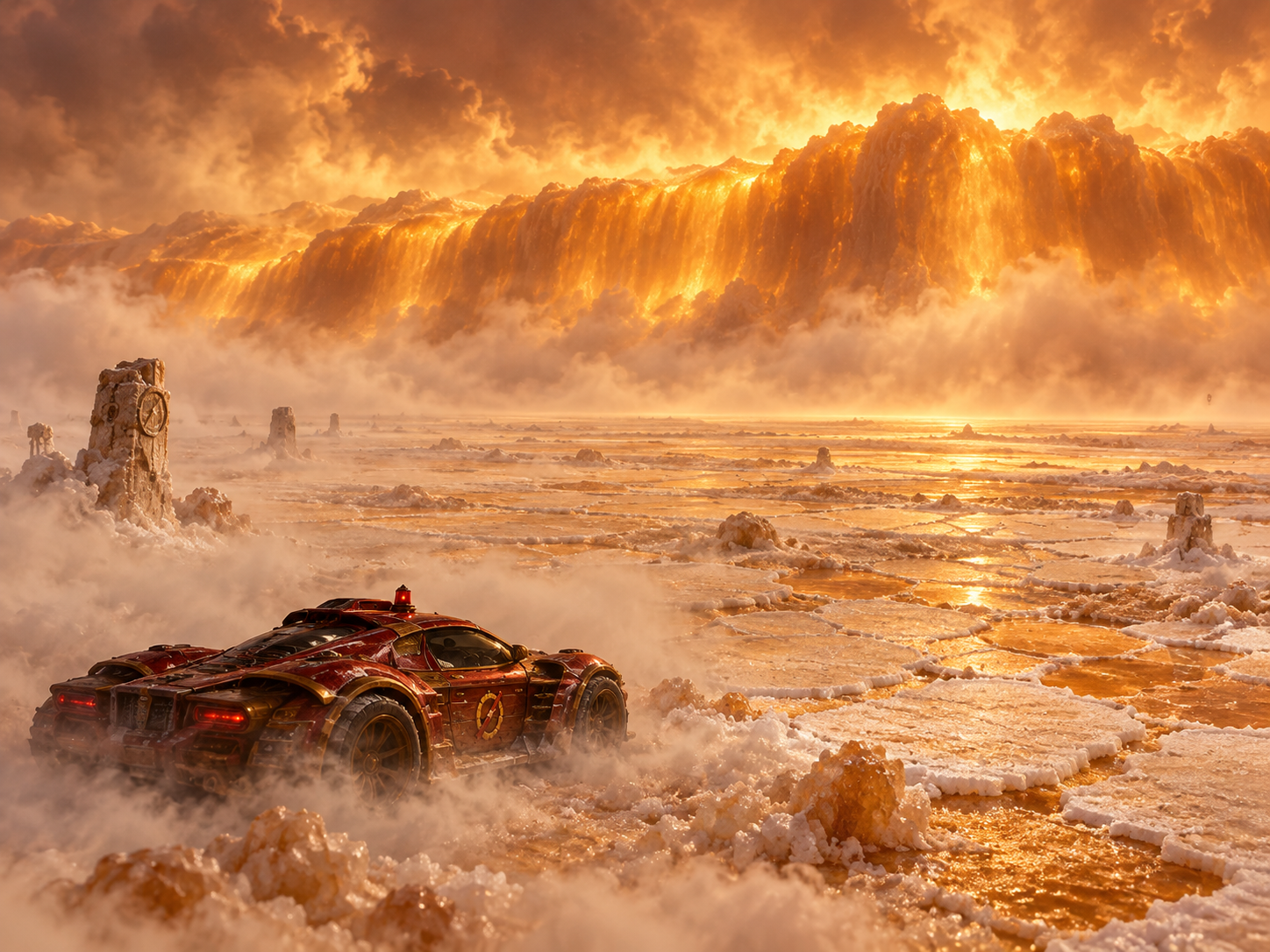
The haze thickened by evening.
Driftwood turned on the Ghost’s forward lamps.
They helped less than expected.
Light scattered through suspended salt.
Russet watched the roadside markers.
Most were old stone posts.
Some had collapsed.
Others leaned at angles.
A few appeared twice.
Driftwood noticed.
“We passed that marker.”
“No.”
“It has the same crack.”
Russet looked.
He was right.
Or it looked right.
“Stop.”
The Ghost stopped.
Russet got out.
The air tasted mineral-dry.
He walked back toward the marker.
Placed one hand on it.
Looked at the ground.
No tire marks.
He returned.
“Different marker.”
Driftwood looked through the windshield.
“Same carving.”
“Yes.”
“Helpful.”
“Old route system.”
“Why repeat the same marker?”
Russet looked toward the haze.
“To tell travelers what kind of ground they’re entering.”
“What kind?”
Russet studied the carved symbol.
A curved line crossed by three short cuts.
“Unstable boundary.”
Driftwood rested one hand on the controls.
“We there?”
“No.”
“How far?”
Russet looked at the map.
Then at the land.
Then folded the map.
Driftwood noticed.
“That bad?”
“The map has stopped helping.”
“Good thing I brought you.”
Russet looked at him.
“That was almost friendly.”
“Don’t spread it around.”
They continued.
Slowly.
The salt haze swirled.
The road vanished completely.
Then, far ahead—
a light.
Amber.
Steady.
Not a lamp.
Too large.
Russet leaned forward.
Driftwood reduced speed.
The amber glow moved.
Not toward them.
Across the horizon.
Slowly.
Like a wave passing behind the salt.
Russet stared.
Driftwood did too.
“What is that?”
Russet’s voice was quieter than before.
“I think we’re close.”
At the fountain courtyard, Strawbrawler pushed the block again.
Warmth.
Weight.
Control.
The block slid.
He stopped.
The heat stopped with him.
Strawbrawler looked down.
No crack.
He grinned.
Blue Bulk nodded.
“That was better.”
“Better?”
“Yes.”
“How much better?”
“Enough.”
Strawbrawler laughed.
“Now you’re doing it on purpose.”
“Yes.”
They reset the block.
Before Strawbrawler could begin again, Blue Bulk turned his head.
Strawbrawler noticed.
“What?”
Blue Bulk did not answer.
His eyes lowered.
The paving stones beneath them.
He stood completely still.
Strawbrawler felt nothing.
Then—
Thum.
Different.
Not inside him.
Beneath him.
Blue Bulk’s posture tightened.
Strawbrawler looked down.
Another pulse.
Thum.
A little stronger.
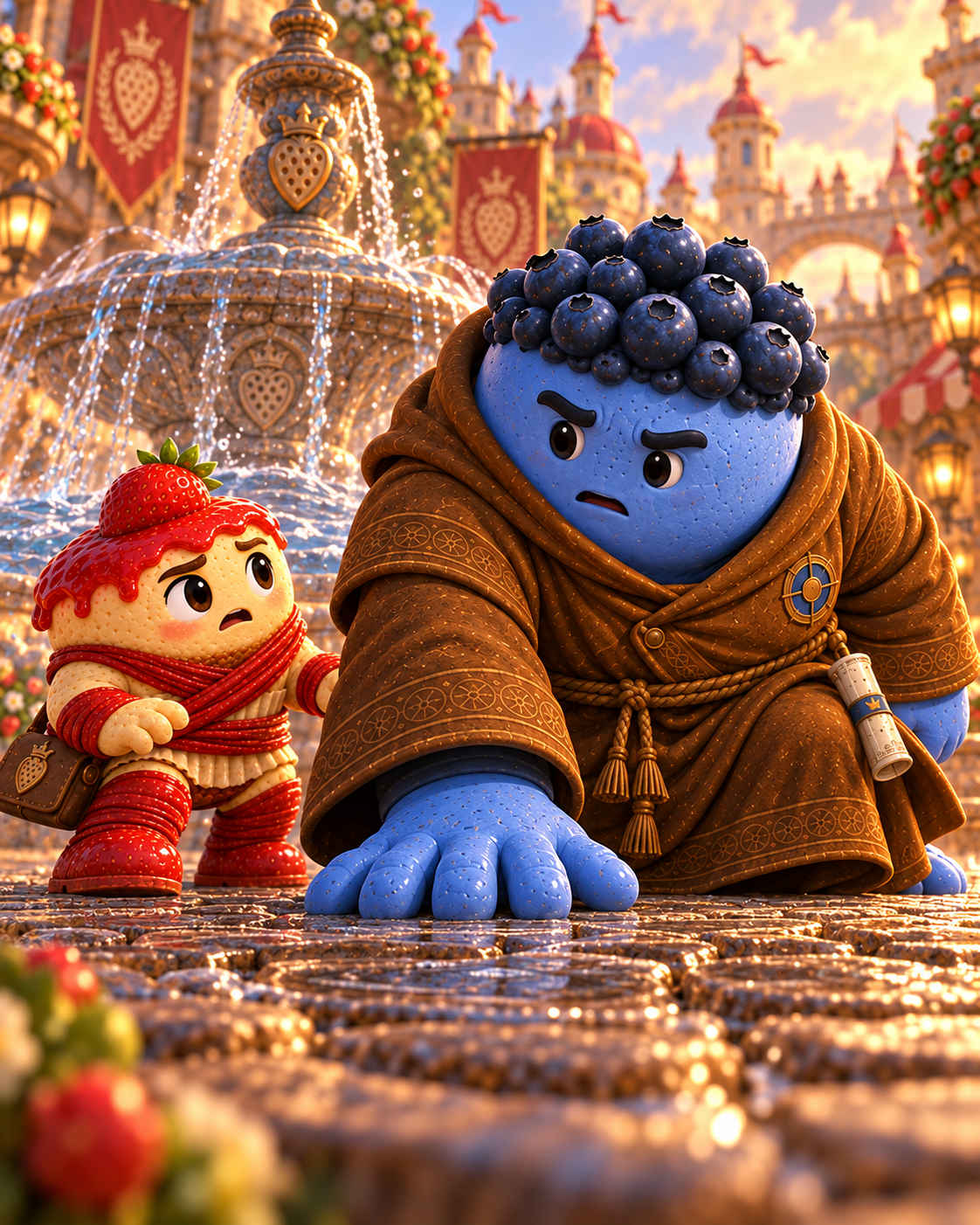
Across the courtyard, water in the fountain trembled.
Strawbrawler stepped back.
“I didn’t do that.”
“I know.”
The water settled.
Then trembled again.
Blue Bulk crouched.
Pressed one hand to the ground.
His expression changed.
Strawbrawler had seen him serious before.
This was different.
“What?”
Blue Bulk closed his eyes.
The pressure was not traveling outward.
It was moving upward.
Deep.
Very deep.
Something beneath Pastrypolis had shifted.
Not much.
Enough.
Blue Bulk opened his eyes.
“Training is finished.”
Strawbrawler’s stomach tightened.
“For today?”
Blue Bulk stood.
“Yes.”
He looked toward the center of the city.
“For today.”
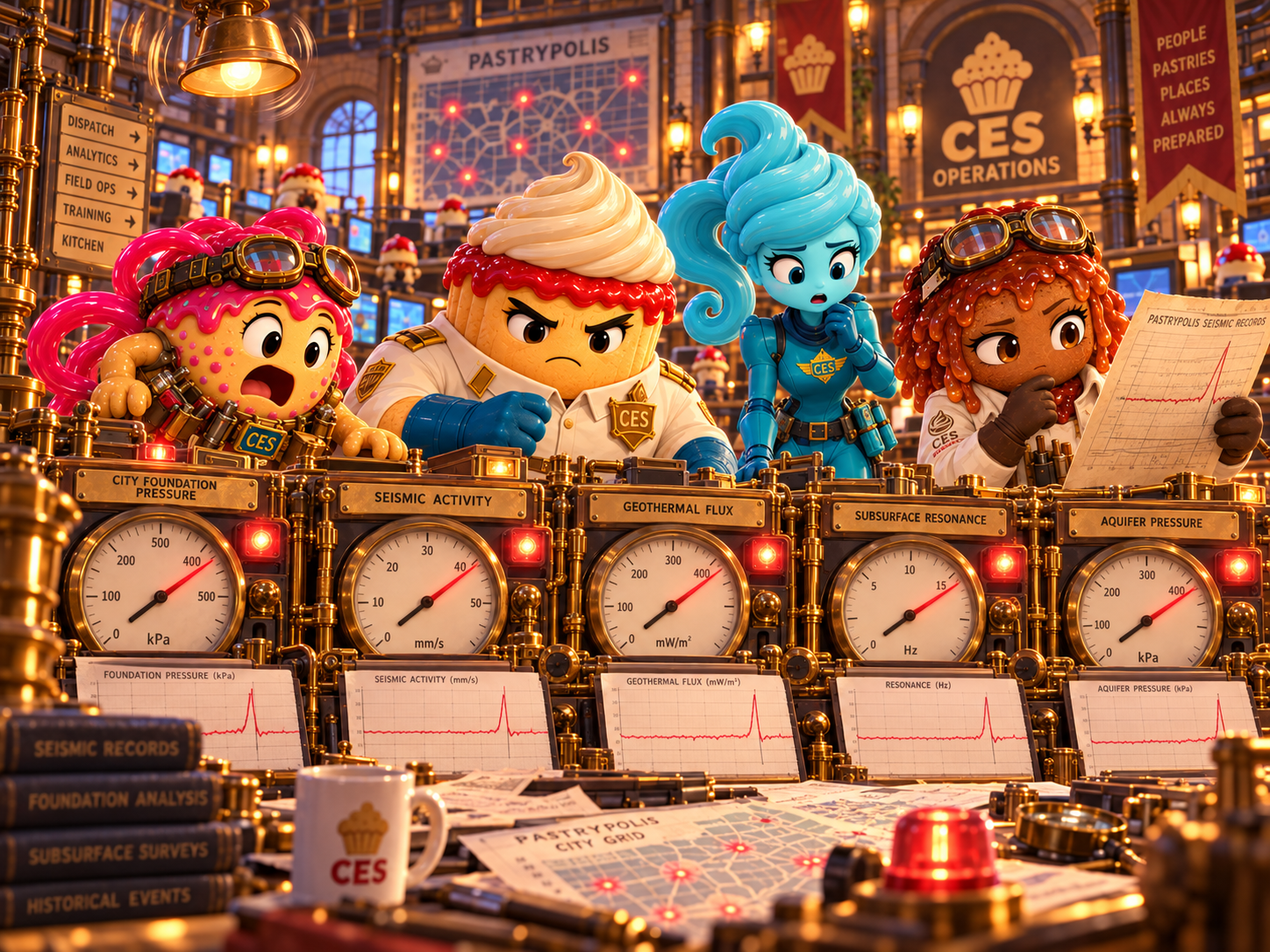
In the Pie Works, every inactive warning bell rang once.
Just once.
No pattern.
No sequence.
One sharp sound from every monitored district.
Whip Siren looked up.
Dave dropped the tool in his hand.
Mara froze over the historical trace.
Captain Crumble walked into operations as the final bell went silent.
“What happened?”
The dispatcher stared at the board.
“I don’t know.”
“Readings?”
“Coming in.”
One needle rose.
Then another.
Then six.
Not violently.
Together.
Mara came to the doorway.
Crumble looked at her.
Mara looked at the instruments.
The needles held at the same angle.
Across different systems.
Different districts.
Different depths.
Perfectly aligned.
Dave whispered:
“That’s new.”
Mara shook her head.
“No.”
Everyone looked at her.
She held the old paper trace from the underground vault.
One section near its center showed six faint lines.
Different gauges.
All meeting at the same height.
Mara looked from the old record to the modern instruments.
Her voice was quiet.
“That is very old.”
The needles dropped.
Every one.
At once.
And somewhere beneath the Pie Works—
deep below the mapped passages—
something struck stone.
Once.
A low, distant impact rolled upward through the foundations.
THUM.
Captain Crumble felt it through her boots.
For several seconds, nobody moved.
Then Crumble looked toward Whip.
“Close the lower access.”
Whip was already moving.
“Dave.”
“Yes.”
“Nothing goes underground without my authorization.”
He did not joke.
“Understood.”
“Mara.”
Mara clutched the old trace.
“I know.”
Crumble looked around the operations room.
This was no longer a strange reading.
No longer one young cheesecake.
No longer one monk.
No longer a faulty instrument.
Something had just touched the entire city at once.
Captain Crumble turned toward the map.
“Find out what.”
Chapter 13 — What the Salt Remembers · Coming next

