CITY OF CRUSTARA
Savarin
Crustara’s western maritime gateway—a port city where the Glazewater estuary meets the Chantilly Sea and inland trade opens toward the wider world.
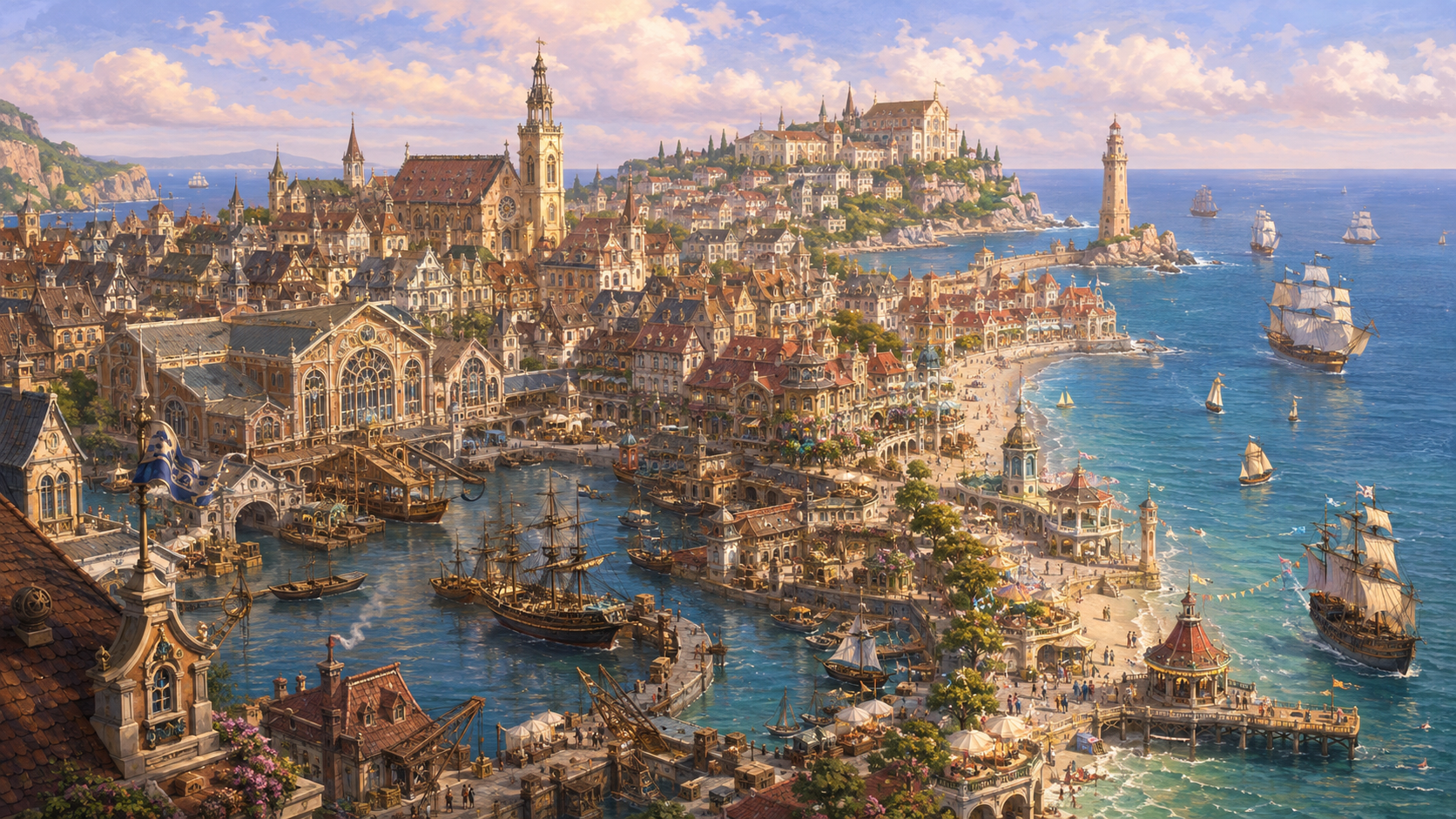
Savarin links inland Crustara with coastal commerce, foreign travel, and the Chantilly Sea.
Harbor at the Edge of the Sea
Savarin grew around the sheltered mouth of the Glazewater River, where the river broadens into an estuary before reaching the Chantilly Sea. Its location made it Crustara’s principal seaport and one of the country’s most outward-looking cities.
Merchant ships, coastal vessels, ferries, fishing craft, travelers, and imported goods all pass through the harbor. Inland cargo moves the other direction, following river and road routes back toward Pastrypolis and the rest of Crustara.
Four Faces of Savarin
Savarin’s districts reflect the different ways the city works, remembers, rests, and settles.
Harbor District
The working waterfront: docks, warehouses, ship traffic, freight handling, repair activity, and the constant movement of goods between sea and land.
Old Savarin
The historic city around older streets, commercial buildings, civic traditions, and long-established institutions. This is where Savarin most visibly remembers its past.
Chantilly Shore
The seaside face of Savarin, shaped by coastal life, leisure, long views, and traditions tied to the Chantilly Sea.
Upper Savarin
A quieter elevated district of civic offices, schools, religious houses, established residences, gardens, and views across the estuary and sea.
City Life & Character
Savarin mixes a working port, historic civic center, seaside culture, and mercantile outlook. It is a place where long-established families, merchants, sailors, travelers, students, clergy, and visitors all share the same city without erasing its local identity.
Upper Savarin includes landmarks such as the Savarin Civic House, the Collegium of Savarin, and the High Gardens, while the harbor and older city remain the engines of daily trade and movement.

